How Many Sessions Does Tattoo Removal Take? 2026 Complete Guide
Most people ask how many sessions laser tattoo removal takes before they book their first appointment. A real answer exists, and it is more specific than most people expect. Session count follows a predictable pattern based on measurable factors like tattoo size, ink color, and skin type.
At Belovese Med Spa in Tifton, GA, trained medical professionals use the Stellar M22 laser system to create a treatment plan built around each individual client. A free consultation is the fastest way to get a number that actually applies to your tattoo. What follows covers exact session ranges by tattoo type, a fading timeline broken down by session phase, what happens during each appointment, and how aftercare directly shapes your total session count.
What Affects the Number of Laser Tattoo Removal Sessions?
Session count is not a guess. Providers use a clinical scoring tool called the Kirby-Desai scale to calculate an estimated number of treatments based on six measurable variables. Each variable below directly impacts how many sessions your specific tattoo will require.
Tattoo Size: Larger tattoos cover more surface area, which means more laser passes and a higher overall session count to achieve meaningful clearance across the full design.
Ink Color: Black ink absorbs laser energy most efficiently and fades fastest, while green, yellow, and purple pigments resist laser wavelengths and require additional sessions to break down completely.
Tattoo Age: Older tattoos sit closer to the skin surface because ink naturally migrates upward over time, making them faster to treat than fresh ink placed at full depth.
Ink Depth and Quality: Professional tattoos go deeper into the dermis than amateur work, so the laser needs more passes to shatter pigment sitting further beneath the surface.
Skin Type and Tone: Skin type determines which laser settings a provider can safely apply, and individual healing rate between sessions directly controls how quickly the body clears fragmented ink particles.
Body Location: Areas near lymph nodes, such as the chest and upper back, clear ink faster than extremities like hands and feet where blood circulation is significantly slower.
Session Count Ranges Based on Tattoo Size, Color, and Age
Most tattoos fall into one of five categories, each carrying a realistic treatment range based on clinical outcomes.
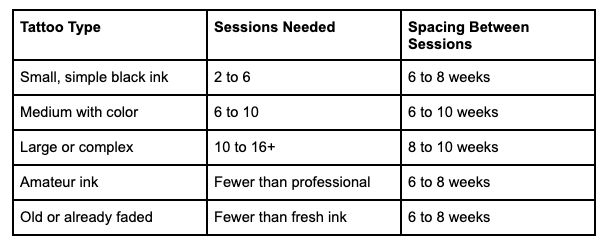
Amateur tattoos and older ink tend to clear in fewer sessions because shallower placement and natural ink migration toward the surface make them easier to treat. Every range above reflects clinical averages rather than guarantees, as individual results depend on variables specific to your tattoo.
Spacing between sessions runs 6 to 10 weeks to allow full skin recovery and give the body sufficient time to flush cleared particles before the next treatment. For a session count built around your specific tattoo, get a personalized session estimate at your free Belovese consultation.
Full Session-by-Session Breakdown of Tattoo Fading Results
Fading happens gradually and follows a consistent pattern across most clients, regardless of tattoo type. Knowing what to expect at each phase removes uncertainty before treatment begins and helps clients make informed decisions about their goals.
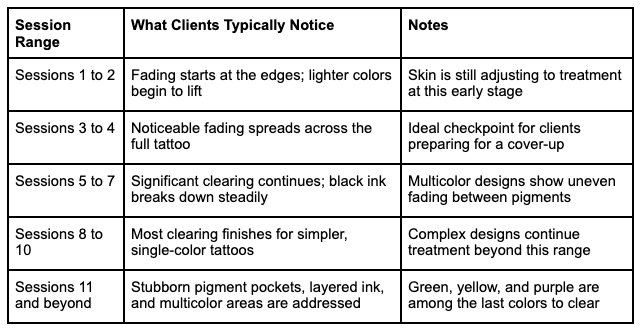
Darker pigments like black and dark blue clear before lighter colors in every case. Green, yellow, and purple sit at the far end of the fading timeline regardless of tattoo age or size.
Clients preparing for a cover-up tattoo can use Sessions 3 to 4 as a natural checkpoint. Most tattoos reach a fading level at that stage where a tattoo artist can work effectively over the area without requiring full clearance first.
How Long Will Each Tattoo Removal Appointment Actually Take?
Most tattoo removal appointments at Belovese finish within 30 to 45 minutes from start to finish, covering prep, treatment, and post-care instructions.
Laser-active time varies by tattoo size:
Small tattoos: Laser contact with skin runs under 60 seconds for most small, simple designs.
Medium tattoos: Active laser time runs approximately 5 to 10 minutes depending on design complexity and color count.
Large tattoos: Larger pieces require up to 20 to 25 minutes of active treatment to cover the full surface area.
Actual laser-on-skin time makes up only a small portion of the total visit, with the remainder covering numbing application, skin assessment, and post-treatment care instructions before you leave.
What Happens During a Tattoo Removal Session at Belovese?
Every step of Belovese's tattoo removal service follows a structured process designed to keep clients comfortable and informed from arrival to departure.
Before Your Session
A provider examines the treatment area first to confirm skin condition and identify the correct laser settings for your skin type and tattoo characteristics.
Numbing: Numbing cream or a local anesthetic gets applied before treatment begins to minimize discomfort throughout the session.
Eye protection: Protective eyewear goes on before the laser activates to shield your eyes from light exposure during treatment.
Pre-session walkthrough: Your provider explains exactly what to expect so nothing during the appointment comes as a surprise.
During Your Session
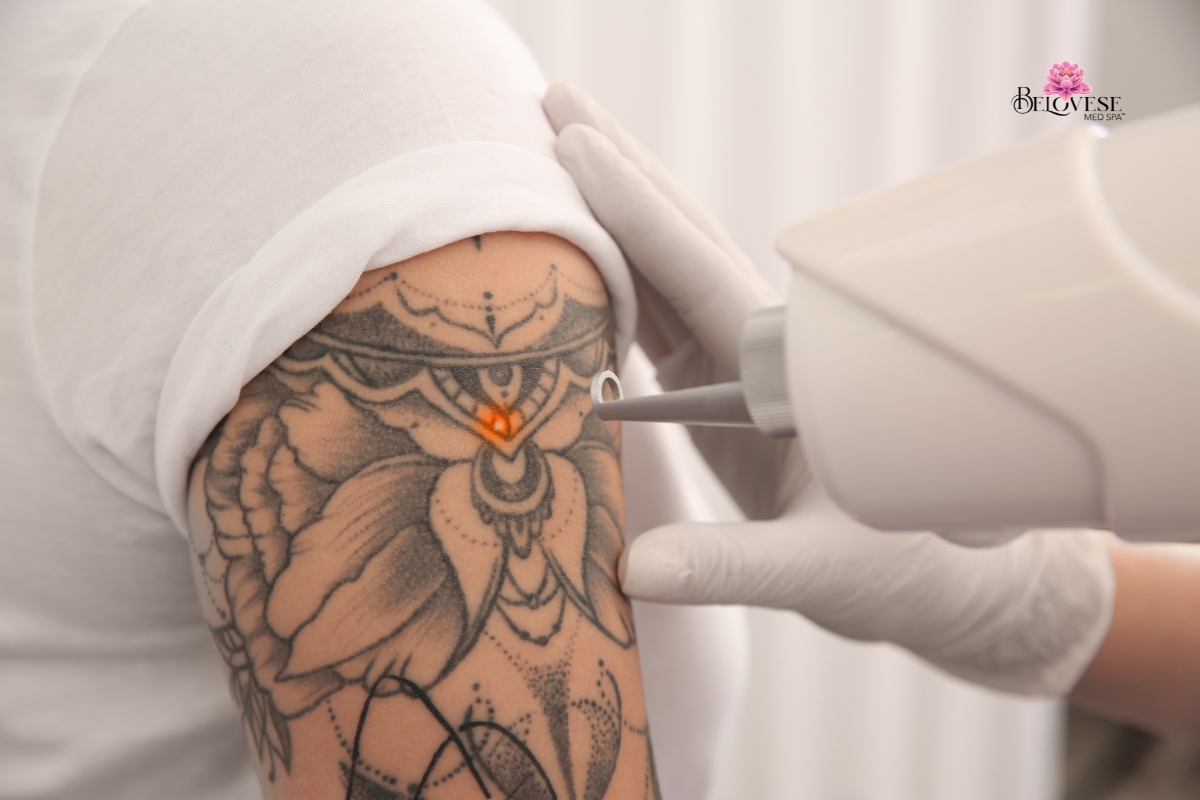
Belovese uses the Stellar M22 Q-switched Nd:YAG laser, which fires short, controlled pulses of light energy that shatter ink particles beneath the skin without affecting surrounding tissue. Most clients compare the sensation to a rubber band snapping against the skin in quick, repetitive intervals. Session length scales with tattoo size, so a compact piece finishes in under a minute while a larger, multicolor design takes longer to cover completely.
After Your Session
Mild redness and warmth around the treated area are expected responses and settle within a few hours for most clients.
Aftercare instructions: Written aftercare guidance goes home with every client so recovery stays on track between appointments.
Same-day return: Most clients head straight back to work or daily activity without needing any downtime after treatment.
Ongoing fading: Skin continues clearing fragmented ink particles over the following weeks as the body processes residual pigment between sessions.
Cover-Up Prep vs. Full Removal: How Session Count Changes
What goal you bring to your first appointment changes how many sessions your provider plans from day one. Cover-up preparation and full removal follow different treatment paths, and stating your objective early lets your provider structure a plan built around your actual endpoint.
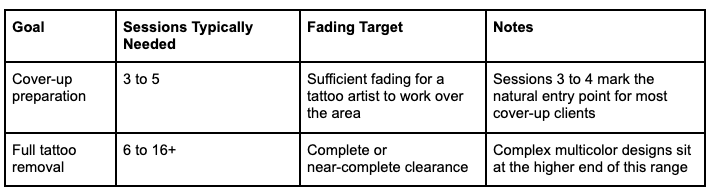
A free consultation at Belovese is where goal-setting happens, and where your provider builds a session plan that accounts for exactly what you want to achieve by the end of treatment.
Why Aftercare Between Sessions Affects Your Final Results
After each session, laser energy shatters tattoo ink into microscopic fragments small enough for the immune system to process. White blood cells identify those fragments as foreign material and carry them out of the body through the lymphatic system over the weeks between appointments. Supporting that clearance process between sessions directly influences how efficiently your body responds and how many total treatments you need.
Sun protection: Apply SPF 30+ to the treated area every time you go outdoors, as UV exposure on healing skin causes pigmentation changes that interfere with subsequent laser treatments.
No picking or scratching: Disturbing the skin surface while it heals disrupts tissue recovery and raises the risk of scarring that complicates future treatment sessions.
Hydration: Staying well hydrated supports lymphatic function, which carries fragmented ink particles out of the body between each appointment.
Avoid smoking: Nicotine restricts blood flow and weakens immune response, slowing ink clearance and potentially adding sessions to your overall treatment plan.
Limit sun exposure: Prolonged sun contact between appointments increases skin sensitivity in the treated area and can delay healing before your next session.
Clients who follow aftercare guidelines consistently give their immune system optimal conditions to clear ink and often complete treatment in fewer total sessions than those who do not.
Professional Laser Tattoo Removal in Tifton, GA: Belovese
Sherri Crosby APRN FNP owns and oversees every tattoo removal treatment at Belovese Med Spa, bringing advanced practice credentials to a service that requires precise clinical judgment at every session. Belovese uses the Stellar M22 by Lumenis, a medical-grade, multi-wavelength laser platform with adjustable settings calibrated to each client's skin type and tattoo characteristics.
No commitment is required to get started, and every new client receives a free consultation to discuss their tattoo, treatment goals, and realistic session expectations before any treatment begins.
Belovese serves clients across South Georgia, including those traveling from Valdosta, Albany, Moultrie, and Thomasville who want access to medical-grade laser tattoo removal close to home. Every session takes place in a calm, professional environment where trained staff guide clients through each phase of care. Ready to get your personalized session estimate? Schedule your free consultation and bring your questions.
FAQS
How many sessions does tattoo removal take on average?
Most tattoos require between 6 and 12 sessions for significant clearance, with final count varying based on size, ink color, skin type, and laser technology used.How long should I wait between tattoo removal sessions?
Waiting 6 to 10 weeks between appointments gives skin adequate time to heal and allows the immune system to fully flush fragmented ink particles before the next session.Can laser tattoo removal completely erase a tattoo?
Complete clearance is achievable for many tattoos, though some may leave faint ghosting depending on original ink depth, pigment color, and individual skin response over time.Does tattoo removal hurt?
Most clients compare the sensation to a rubber band snapping against skin repeatedly. Numbing cream and local anesthetic options at Belovese keep each session manageable and comfortable.Can I get a cover-up tattoo after just a few removal sessions?
Cover-up preparation typically takes 3 to 5 sessions. A provider and tattoo artist can assess together whether sufficient fading has been reached before new ink goes on.How do I know if I am a good candidate for tattoo removal?
A free consultation at Belovese reviews your skin type, tattoo characteristics, and personal goals to determine whether laser treatment suits your situation and what results to expect.
