
GLP-1 Injections vs Weight Loss Pills: Which Option Works Best in Tifton GA?
Interest in medical weight management continues to grow as more people seek options that support long term results. GLP one medications now play an important role in modern weight loss care. Doctors often prescribe these treatments to help regulate appetite, control blood sugar, and support healthier eating habits.
Comparison between injections and oral medications often arises when people evaluate treatment options. Injectable medication delivers the compound directly through the body, while pills enter through the digestive system. Each approach offers different benefits depending on patient preference, consistency, and how the body responds to treatment.
Patients searching for weight loss injections in Tifton often want clear guidance before choosing a treatment path. Providers who offer GLP one injections Tifton GA help patients review available options and determine which approach fits personal goals, health history, and lifestyle.
What Are GLP-1 Medications for Weight Loss?
GLP one refers to glucagon-like peptide one, a hormone that plays an important role in appetite control and blood sugar regulation. Body releases this hormone after eating, which signals the brain that food intake has satisfied hunger. Scientists developed medications that imitate this natural hormone to help patients manage weight and improve metabolic health.
GLP one based medications support weight reduction by affecting several biological processes linked to appetite and digestion. Reduced hunger often leads to lower calorie intake during daily meals. Slow stomach emptying allows people to feel satisfied for longer periods after eating. Blood sugar stability also improves, which helps prevent sudden hunger spikes.
Doctors often include these medications in structured medical weight loss treatment plans. Many programs combine medication with nutritional guidance and lifestyle changes to improve results. Semaglutide weight loss therapies represent one widely used option within this category.
GLP-1 Injections for Weight Loss: How They Work
Injectable GLP one medications support weight management by influencing hormones that regulate hunger and digestion. Doctors prescribe these treatments when patients struggle with appetite control or metabolic imbalance.
Medication enters the body through a small injection, which allows steady absorption and reliable dosing. Many providers include this option within supervised weight management programs to help patients build healthier eating patterns and long term results.
Hormone Mimic Action
Medication imitates natural GLP one hormones, which signal the brain to reduce hunger and support better appetite regulation.Reduced Appetite Signals
Brain receives stronger fullness signals after meals, helping patients naturally decrease portion sizes and daily calorie intake.Slower Digestive Emptying
Food remains in the stomach longer, which extends feelings of fullness and helps prevent frequent hunger between meals.Improved Metabolic Control
Medication helps stabilize blood sugar levels, which supports balanced energy levels and reduces sudden cravings for food.
GLP-1 Weight Loss Pills: How They Work
Oral medications provide another approach for people who prefer tablets instead of injections. Doctors prescribe these medications to support appetite control and better eating habits during supervised weight management care.
Pill based treatment requires consistent daily use and proper timing to help the body absorb medication effectively. Digestive absorption differs from injectable treatment, yet both options aim to influence hormones linked to hunger and satiety.
Digestive Absorption Process
Medication enters the digestive tract after swallowing, where intestinal lining gradually absorbs active compounds into the bloodstream.Hormone Receptor Activation
Absorbed medication interacts with GLP one receptors that influence appetite signals and support improved glucose regulation.Reduced Hunger Signals
Brain receives hormonal signals that help lower appetite intensity and support better control over daily calorie intake.Longer Satiety After Meals
Digestive slowdown promotes longer fullness after eating which helps reduce frequent snacking and supports structured eating habits.
GLP-1 Injections vs Weight Loss Pills: Key Differences
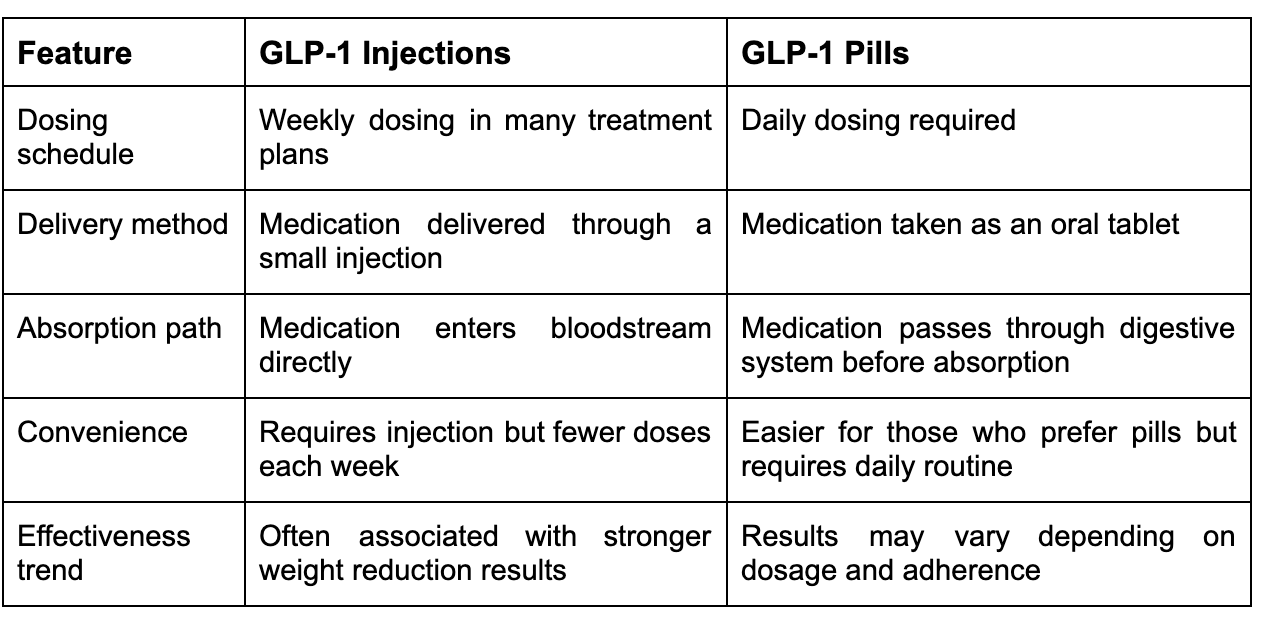
Choice between injections and pills depends on treatment goals, medical history, and lifestyle habits. Some individuals prefer weekly dosing because it requires less frequent administration. Others feel more comfortable with oral medication taken each day.
Health providers often review patient preferences and health factors before recommending a treatment plan. Understanding differences between delivery methods helps patients decide which approach aligns with personal comfort and long term weight management goals.

Which Option Is More Effective for Weight Loss?
Effectiveness often depends on how medication interacts with appetite signals and metabolic function. Injectable treatment often produces stronger outcomes in clinical settings because medication enters the bloodstream directly and maintains steady activity.
Oral medication can still support weight reduction when patients follow dosing instructions carefully. Many providers evaluate patient health history, weight goals, and lifestyle habits before recommending a treatment path.
Medication Strength and Dosage
Higher dosing levels and appropriate titration schedules often influence how strongly medication affects appetite control and weight reduction progress.Consistency of Treatment Use
Regular dosing and adherence to medical instructions support stable hormone activity and improve long term treatment outcomes.Daily Nutrition and Physical Activity
Balanced eating patterns and regular physical activity help medication support sustainable weight management and metabolic health improvements.Individual Metabolism and Health Factors
Metabolic rate, insulin sensitivity, and existing health conditions influence how the body responds to medication assisted weight management.
Side Effects of GLP-1 Injections vs Pills
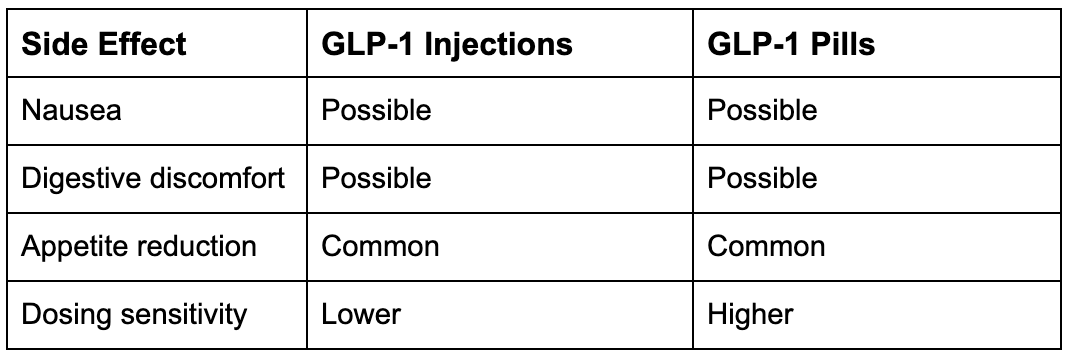
Side effects may occur as the body adapts to hormone based treatment that influences appetite and digestion. Nausea or mild stomach discomfort often appears during early stages of treatment and usually improves as dosage adjustments stabilize hormone activity. Digestive changes may also affect appetite patterns and eating frequency during the first weeks of use.
Medical supervision helps manage symptoms and ensures safe dosage adjustments when needed. Providers monitor patient response and recommend gradual dose increases to support better tolerance and steady progress.
Choosing the Right Weight Loss Option for Your Goals
GLP one based treatments offer two primary options for people seeking medically supervised weight management. Injectable medication often produces stronger results because direct delivery allows steady hormone activity.
Oral medication still provides a practical alternative for individuals who prefer tablets and can maintain consistent dosing habits. Choice between these options depends on personal health goals, lifestyle preferences, and guidance from a qualified medical provider.
Belovese provides medically supervised weight management services for patients who want structured support and professional care. Schedule a consultation with the Belovese team to discuss treatment options and determine whether GLP one injections Tifton GA may support your weight management goals.
FAQs
Which option helps reduce weight faster, injections or pills?
Injectable medication often produces faster weight reduction because hormone delivery remains steady and direct in the body. Oral medication can still support progress when patients follow dosing instructions carefully and maintain consistent eating habits.Do GLP one medications require a prescription?
Prescription approval usually remains necessary because these medications influence appetite hormones and blood sugar regulation. Medical providers evaluate health history and treatment goals before recommending a suitable option.Can oral medication provide results similar to injections?
Oral medication may support weight reduction for individuals who prefer tablets and follow daily dosing requirements carefully. Digestive absorption can influence effectiveness compared with direct hormone delivery through injections.Are side effects common with hormone based weight management medication?
Mild digestive symptoms such as nausea or stomach discomfort may appear when treatment begins. Gradual dosage adjustments and medical supervision often help patients tolerate medication more comfortably.How can someone start medically supervised weight management treatment?
Consultation with a qualified provider allows evaluation of health status, lifestyle habits, and weight management goals. Professional guidance helps determine whether medication based treatment fits an individual care plan.
