

How Integrated Weight Loss and Wellness Plans Improve Health and Confidence
Weight loss care continues to shift away from quick fixes and strict plans that ignore how the body actually works. Many people now look for approaches that support overall health, daily energy, and long term balance rather than short lived results.
Weight management often affects physical health, mental wellbeing, and confidence at the same time. Food choices influence mood and focus. Stress impacts habits and consistency. Supportive care helps people feel steadier, more informed, and more in control throughout the process.
Educational discussion guides this topic without promises or exaggerated outcomes. Integrated weight loss and wellness focuses on patient needs, medical awareness, and realistic progress. Belovese reflects this care model by placing health understanding and confidence building at the center of each wellness decision.
What Does Integrated Weight Loss and Wellness Really Mean
Integrated weight loss and wellness focuses on supporting the whole body through coordinated care rather than treating weight as a single issue.
Medical guidance
Professional evaluation helps identify health factors that influence weight, energy, and safety before changes begin.
Nutrition support
Food planning supports metabolism, blood sugar balance, and daily energy instead of strict restriction.
Lifestyle habits
Sleep quality, movement patterns, and stress levels receive attention because daily habits shape long term progress.
Wellness monitoring
Ongoing check-ins track how the body responds, allowing adjustments based on real health feedback rather than guesswork.
Integrated care differs from diet only or exercise only plans by addressing multiple systems together, creating a stronger foundation for health improvement and confidence growth.
How Medical Oversight Improves Safety and Results
Medical oversight brings structure, safety, and clarity to weight loss planning from the very beginning. Professional evaluation helps align health goals with individual medical needs rather than relying on trial and error.
Health assessment before action
Clinical review identifies underlying conditions that influence weight, energy levels, and physical tolerance.
Medication and history awareness
Care teams consider current medications and past health concerns to reduce unwanted reactions or setbacks.
Metabolic insight
Testing and observation reveal how the body processes food and energy, guiding smarter adjustments.
Expectation management
Clinician guidance sets realistic goals based on health data instead of pressure driven timelines.
Informed oversight reduces risk while supporting steady progress, helping individuals feel confident about each wellness decision.
How Nutrition and Metabolism Support Weight Loss?
Nutrition supports how the body creates energy, manages blood sugar, and maintains daily balance. Food choices affect hormone signals, fuel use, and mental clarity throughout the day. Consistent nutrition habits help stabilize energy levels and reduce sudden hunger shifts that disrupt routines. Thoughtful guidance helps people understand how meals support physical function rather than focusing only on restriction.
Sustainable progress depends on metabolic support rather than short term control. Balanced intake helps the body respond better to activity, rest, and stress. Education around nutrition builds awareness and confidence with everyday choices. Long term wellness improves when nutrition fits lifestyle needs and supports steady metabolic health instead of forcing rigid rules.
How Hormone Balance Supports Energy and Weight Control
Hormones play a central role in how the body manages hunger, energy use, mood, and fat storage. Balanced hormone activity helps people feel steadier, more motivated, and better equipped to maintain healthy habits.
Appetite regulation
Hormone signals guide hunger and fullness cues, which influences food choices and portion awareness.
Energy production
Balanced levels support stable energy throughout the day rather than sudden fatigue or crashes.
Mood and motivation
Hormone health affects emotional stability, focus, and consistency with daily routines.
Wellness evaluation
Care teams often review hormone patterns to understand barriers that slow progress or reduce confidence.
Physical balance supports daily energy, clearer focus, and stronger self confidence during a wellness plan.
How Do Mental Health and Confidence Affect Weight Loss?
Mental wellbeing plays a major role in daily health choices. Stress can disrupt routines, affect sleep, and influence eating patterns. Mindset shapes how people respond to setbacks and progress. Self image often determines consistency, especially during long term wellness efforts. Supportive care helps individuals feel understood rather than judged, which improves follow through.
Confidence grows as physical health improves, yet confidence also fuels better habits. Feeling capable encourages steady routines and healthier decisions. Emotional balance helps people stay engaged during slow periods without losing motivation. Integrated care connects mental and physical health, allowing wellness plans to support both progress and self trust at the same time.
Why Personalized Wellness Plans Work Better
Personalized wellness planning recognizes that health goals differ based on lifestyle, medical history, and daily routines. Individual focus helps people stay engaged and realistic about progress without forcing generic rules that fail over time.
Individual health history
Personal background such as past conditions and current health status guides safer and smarter planning.
Lifestyle alignment
Daily schedules, stress levels, and activity patterns shape plans that feel practical and sustainable.
Goal driven structure
Clear personal goals create direction and accountability instead of pressure or comparison.
Patient centered care
Ongoing collaboration builds trust, encourages consistency, and supports long term commitment to wellness.
Why Integrated Wellness Supports Long Term Health
Integrated weight loss and wellness plans support health and confidence by addressing how the body and mind work together. Medical insight, nutrition awareness, and lifestyle guidance create a balanced approach that feels realistic and steady. Progress becomes easier to maintain when care looks beyond short term outcomes.
Education and safety remain central throughout the process. Informed decisions help reduce risk and prevent frustration caused by extreme methods. Sustainable routines build trust in the process and allow gradual improvement without pressure or unrealistic expectations.
Holistic care encourages long term thinking and patient focused support. Thoughtful wellness planning helps people feel confident about choices that support daily life and overall health. Schedule a consultation with Belovese to learn how integrated care can support a healthier and more confident future.
FAQs
How do integrated weight loss and wellness plans differ from standard programs?
Integrated plans address medical health, nutrition, lifestyle habits, and mental wellbeing together. Standard programs often focus only on diet or exercise, which limits long term results and consistency.
Why does medical guidance matter during a weight loss plan?
Medical guidance helps identify health factors that affect safety and progress. Professional insight supports realistic goals, safer adjustments, and informed decision making throughout the process.
Can wellness focused weight loss improve confidence?
Confidence often improves when physical health, energy levels, and emotional balance improve together. Supportive care helps people feel more in control, which encourages consistency and self trust.
Are integrated wellness plans suitable for busy lifestyles?
Personalized planning considers daily schedules, stress levels, and routines. Flexible structure helps people stay engaged without disrupting work or personal responsibilities.
What should someone expect during an integrated wellness consultation?
Initial consultations focus on health history, goals, and lifestyle factors. Clear education helps set expectations and build a plan that supports steady and sustainable progress.
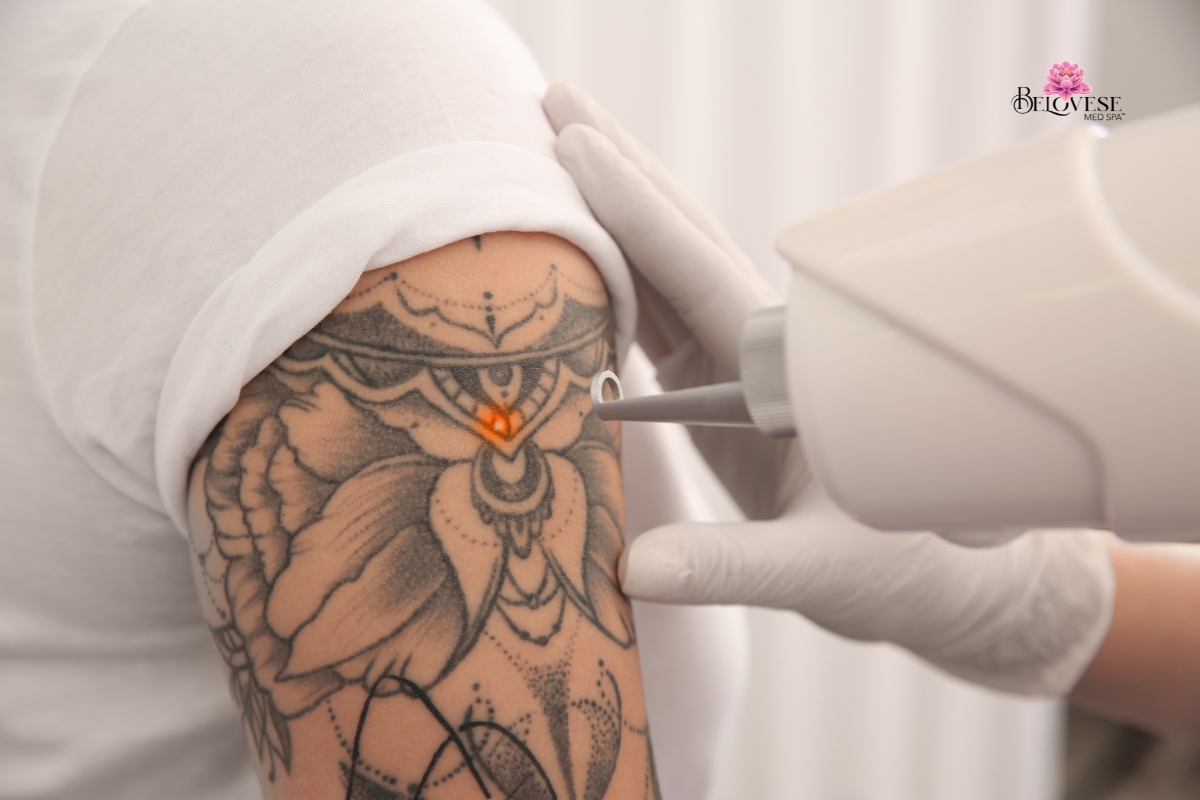
How Many Sessions Does Tattoo Removal Take? 2026 Complete Guide
Most people ask how many sessions laser tattoo removal takes before they book their first appointment. A real answer exists, and it is more specific than most people expect. Session count follows a predictable pattern based on measurable factors like tattoo size, ink color, and skin type.
At Belovese Med Spa in Tifton, GA, trained medical professionals use the Stellar M22 laser system to create a treatment plan built around each individual client. A free consultation is the fastest way to get a number that actually applies to your tattoo. What follows covers exact session ranges by tattoo type, a fading timeline broken down by session phase, what happens during each appointment, and how aftercare directly shapes your total session count.
What Affects the Number of Laser Tattoo Removal Sessions?
Session count is not a guess. Providers use a clinical scoring tool called the Kirby-Desai scale to calculate an estimated number of treatments based on six measurable variables. Each variable below directly impacts how many sessions your specific tattoo will require.
Tattoo Size: Larger tattoos cover more surface area, which means more laser passes and a higher overall session count to achieve meaningful clearance across the full design.
Ink Color: Black ink absorbs laser energy most efficiently and fades fastest, while green, yellow, and purple pigments resist laser wavelengths and require additional sessions to break down completely.
Tattoo Age: Older tattoos sit closer to the skin surface because ink naturally migrates upward over time, making them faster to treat than fresh ink placed at full depth.
Ink Depth and Quality: Professional tattoos go deeper into the dermis than amateur work, so the laser needs more passes to shatter pigment sitting further beneath the surface.
Skin Type and Tone: Skin type determines which laser settings a provider can safely apply, and individual healing rate between sessions directly controls how quickly the body clears fragmented ink particles.
Body Location: Areas near lymph nodes, such as the chest and upper back, clear ink faster than extremities like hands and feet where blood circulation is significantly slower.
Session Count Ranges Based on Tattoo Size, Color, and Age
Most tattoos fall into one of five categories, each carrying a realistic treatment range based on clinical outcomes.
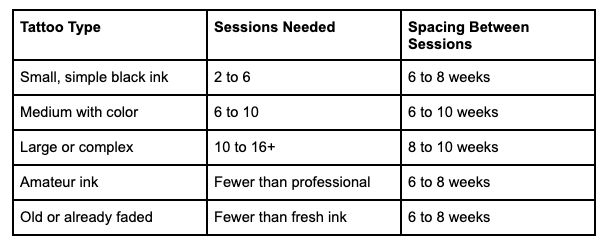
Amateur tattoos and older ink tend to clear in fewer sessions because shallower placement and natural ink migration toward the surface make them easier to treat. Every range above reflects clinical averages rather than guarantees, as individual results depend on variables specific to your tattoo.
Spacing between sessions runs 6 to 10 weeks to allow full skin recovery and give the body sufficient time to flush cleared particles before the next treatment. For a session count built around your specific tattoo, get a personalized session estimate at your free Belovese consultation.
Full Session-by-Session Breakdown of Tattoo Fading Results
Fading happens gradually and follows a consistent pattern across most clients, regardless of tattoo type. Knowing what to expect at each phase removes uncertainty before treatment begins and helps clients make informed decisions about their goals.
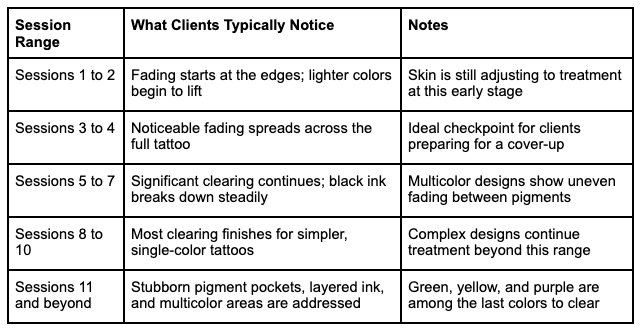
Darker pigments like black and dark blue clear before lighter colors in every case. Green, yellow, and purple sit at the far end of the fading timeline regardless of tattoo age or size.
Clients preparing for a cover-up tattoo can use Sessions 3 to 4 as a natural checkpoint. Most tattoos reach a fading level at that stage where a tattoo artist can work effectively over the area without requiring full clearance first.
How Long Will Each Tattoo Removal Appointment Actually Take?
Most tattoo removal appointments at Belovese finish within 30 to 45 minutes from start to finish, covering prep, treatment, and post-care instructions.
Laser-active time varies by tattoo size:
Small tattoos: Laser contact with skin runs under 60 seconds for most small, simple designs.
Medium tattoos: Active laser time runs approximately 5 to 10 minutes depending on design complexity and color count.
Large tattoos: Larger pieces require up to 20 to 25 minutes of active treatment to cover the full surface area.
Actual laser-on-skin time makes up only a small portion of the total visit, with the remainder covering numbing application, skin assessment, and post-treatment care instructions before you leave.
What Happens During a Tattoo Removal Session at Belovese?
Every step of Belovese's tattoo removal service follows a structured process designed to keep clients comfortable and informed from arrival to departure.
Before Your Session
A provider examines the treatment area first to confirm skin condition and identify the correct laser settings for your skin type and tattoo characteristics.
Numbing: Numbing cream or a local anesthetic gets applied before treatment begins to minimize discomfort throughout the session.
Eye protection: Protective eyewear goes on before the laser activates to shield your eyes from light exposure during treatment.
Pre-session walkthrough: Your provider explains exactly what to expect so nothing during the appointment comes as a surprise.
During Your Session
Belovese uses the Stellar M22 Q-switched Nd:YAG laser, which fires short, controlled pulses of light energy that shatter ink particles beneath the skin without affecting surrounding tissue. Most clients compare the sensation to a rubber band snapping against the skin in quick, repetitive intervals. Session length scales with tattoo size, so a compact piece finishes in under a minute while a larger, multicolor design takes longer to cover completely.
After Your Session
Mild redness and warmth around the treated area are expected responses and settle within a few hours for most clients.
Aftercare instructions: Written aftercare guidance goes home with every client so recovery stays on track between appointments.
Same-day return: Most clients head straight back to work or daily activity without needing any downtime after treatment.
Ongoing fading: Skin continues clearing fragmented ink particles over the following weeks as the body processes residual pigment between sessions.
Cover-Up Prep vs. Full Removal: How Session Count Changes
What goal you bring to your first appointment changes how many sessions your provider plans from day one. Cover-up preparation and full removal follow different treatment paths, and stating your objective early lets your provider structure a plan built around your actual endpoint.
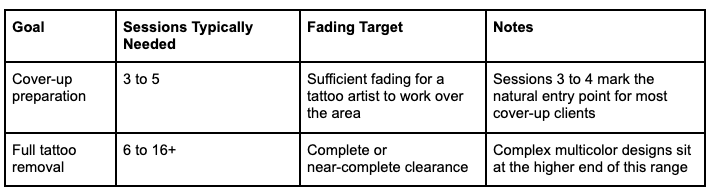
A free consultation at Belovese is where goal-setting happens, and where your provider builds a session plan that accounts for exactly what you want to achieve by the end of treatment.
Why Aftercare Between Sessions Affects Your Final Results
After each session, laser energy shatters tattoo ink into microscopic fragments small enough for the immune system to process. White blood cells identify those fragments as foreign material and carry them out of the body through the lymphatic system over the weeks between appointments. Supporting that clearance process between sessions directly influences how efficiently your body responds and how many total treatments you need.
Sun protection: Apply SPF 30+ to the treated area every time you go outdoors, as UV exposure on healing skin causes pigmentation changes that interfere with subsequent laser treatments.
No picking or scratching: Disturbing the skin surface while it heals disrupts tissue recovery and raises the risk of scarring that complicates future treatment sessions.
Hydration: Staying well hydrated supports lymphatic function, which carries fragmented ink particles out of the body between each appointment.
Avoid smoking: Nicotine restricts blood flow and weakens immune response, slowing ink clearance and potentially adding sessions to your overall treatment plan.
Limit sun exposure: Prolonged sun contact between appointments increases skin sensitivity in the treated area and can delay healing before your next session.
Clients who follow aftercare guidelines consistently give their immune system optimal conditions to clear ink and often complete treatment in fewer total sessions than those who do not.
Professional Laser Tattoo Removal in Tifton, GA: Belovese
Sherri Crosby APRN FNP owns and oversees every tattoo removal treatment at Belovese Med Spa, bringing advanced practice credentials to a service that requires precise clinical judgment at every session. Belovese uses the Stellar M22 by Lumenis, a medical-grade, multi-wavelength laser platform with adjustable settings calibrated to each client's skin type and tattoo characteristics.
No commitment is required to get started, and every new client receives a free consultation to discuss their tattoo, treatment goals, and realistic session expectations before any treatment begins.
Belovese serves clients across South Georgia, including those traveling from Valdosta, Albany, Moultrie, and Thomasville who want access to medical-grade laser tattoo removal close to home. Every session takes place in a calm, professional environment where trained staff guide clients through each phase of care. Ready to get your personalized session estimate? Schedule your free consultation and bring your questions.
FAQS
How many sessions does tattoo removal take on average?
Most tattoos require between 6 and 12 sessions for significant clearance, with final count varying based on size, ink color, skin type, and laser technology used.How long should I wait between tattoo removal sessions?
Waiting 6 to 10 weeks between appointments gives skin adequate time to heal and allows the immune system to fully flush fragmented ink particles before the next session.Can laser tattoo removal completely erase a tattoo?
Complete clearance is achievable for many tattoos, though some may leave faint ghosting depending on original ink depth, pigment color, and individual skin response over time.Does tattoo removal hurt?
Most clients compare the sensation to a rubber band snapping against skin repeatedly. Numbing cream and local anesthetic options at Belovese keep each session manageable and comfortable.Can I get a cover-up tattoo after just a few removal sessions?
Cover-up preparation typically takes 3 to 5 sessions. A provider and tattoo artist can assess together whether sufficient fading has been reached before new ink goes on.How do I know if I am a good candidate for tattoo removal?
A free consultation at Belovese reviews your skin type, tattoo characteristics, and personal goals to determine whether laser treatment suits your situation and what results to expect.

COMPANY
SERVICES
ADDRESS


COMPANY
SERVICES
ADDRESS
Copyright 2026. Belovese Med Spa. All Rights Reserved.
Made with ❤️by The Revive Agency.